Maxa Fundraiser - THE BRIDGE DEBUT

—

JOIN

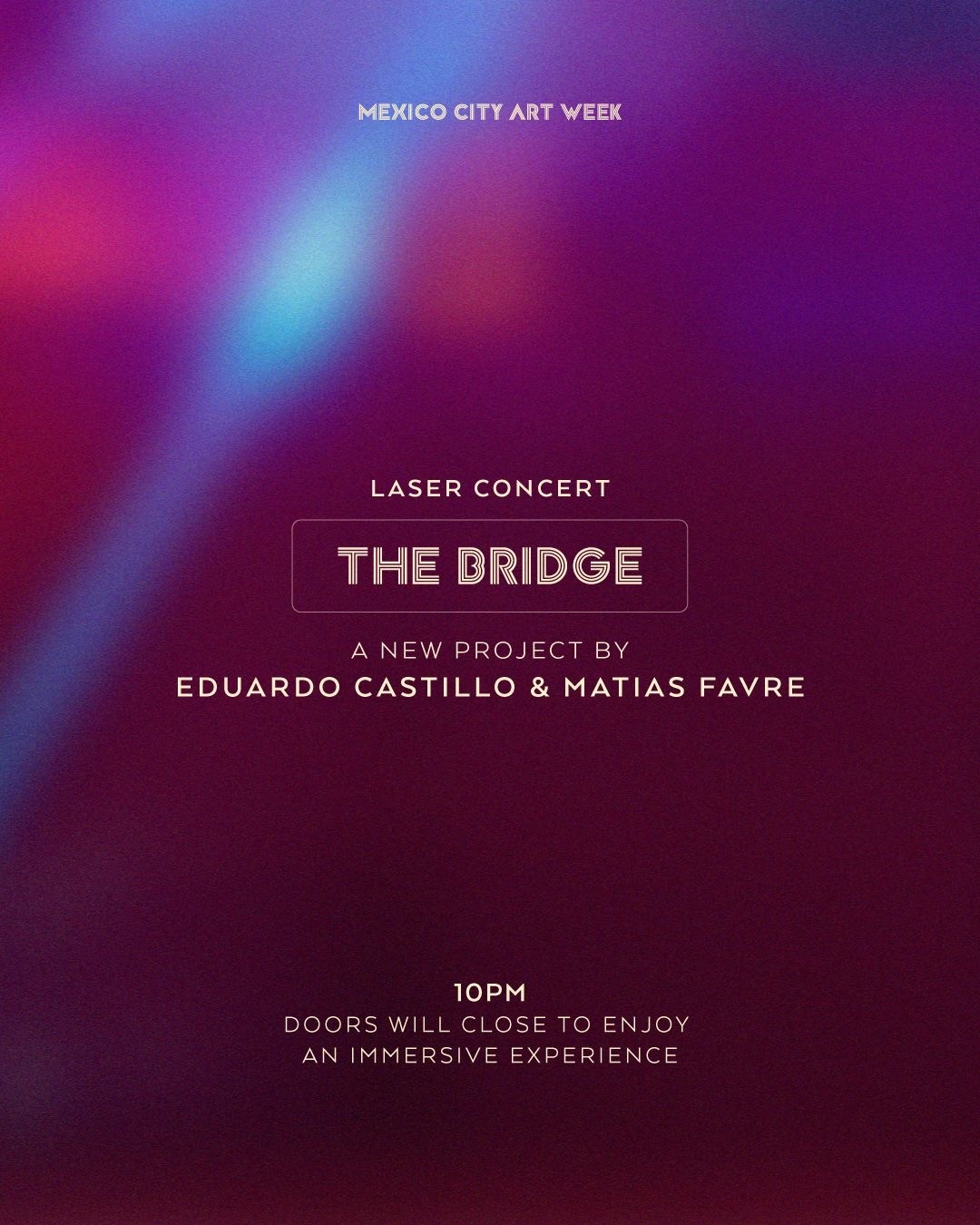
Friday, February 6th at Frontera is one of the most important shows I'll play this year. It's where I'm introducing something new to the world, something I've been building with my dear friend Mati Favre, an incredible musician whose presence has unlocked a new dimension in my work. We're calling it THE BRIDGE. I named it this because that's exactly what it is. A bridge from my solo live show, where I focus on emotional exchange and deep connection with the audience, toward a more dancefloor-driven energy. My signature remains, the improvisational spirit, the commitment to presence and unknown territory. With Mati's textures and foundation supporting the sound, I'm able to journey even further into improvisation, into spaces I couldn't reach alone. The collaboration creates a structure that paradoxically allows more freedom. We build the bridge together, and then I can walk across it into territories I've only sensed from a distance. Bridges mean more than this musical explanation. A bridge is a space between states. It's transition made tangible. It connects what was to what will be, one shore to another, the familiar to the unexplored. Bridges span distances we couldn't cross alone. They're architecture and metaphor at once, solid enough to hold our weight but existing in that liminal space that's neither here nor there. Standing on a bridge, you're in motion even when you're still. You're committed to crossing but haven't arrived. There's something profound in that in-between state, something that feels true to where I am as an artist right now. This year I made a conscious choice. I usually present my solo show Overview Effect as a large production with guests and elaborate staging. I wanted 2025 to be about something more intimate and more collaborative. A new musical approach that's actually deeply familiar because it returns me to the core of why I make music in the first place. Connection and presence. THE BRIDGE represents this return while simultaneously pushing forward into new sonic territory. The show at Frontera is presented by Maxa as a Burning Man fundraiser, and the container reflects the intention behind it. Doors close at 10pm so that everyone's journey begins together. This protects the collective experience, ensuring that when we start, we all start together. There's power in that synchronization, in knowing that everyone in the room is entering the same journey at the same moment. It creates a field of shared intention that individual arrivals can't replicate. We're building something together from the first note. Nesh will be designing the visual experience. He's a lighting artist whose curiosity and passion for experimentation led him to explore musical lighting, discovering in live performance a unique space for expression and creativity. Using lasers as his main source of light and music as his creative guide, he crafts immersive visual experiences. His artistic journey has been shaped by his participation in projects such as Mayan Warrior and Maxa, as well as his experiences at Burning Man and festivals around the world. Currently his work focuses on light installations in natural environments, where light engages with surroundings and transforms space into something sensory and contemplative. Elegant is the word. The lasers will dance with the music, become part of the conversation. The legendary Maxa arts car sound system will be our main instrument. If you know, you know. If you don't, come find out.
UPCOMING SHOWS

Caravana - The Road to Jaisalmer

Some friendships begin with a conversation and others begin with a photograph. When a mutual friend introduced me to Nadja, she spent much of our first afternoon together guiding me through the images on her phone, and I remember feeling that I was being shown a life lived with rare devotion: village weddings in places whose names I could scarcely pronounce, musicians captured at the instant their eyes closed into the song, landscapes that seemed to exist only for those willing to cross great distances to stand inside them. Nadja travels in order to dissolve into cultures, and she seeks music in its most elemental condition, played by the families who have carried it for generations. Of all the places she has given her heart to, India holds the largest share, and within India, the Manganiyars of the Thar Desert hold the deepest. The Manganiyars are hereditary musicians of western Rajasthan, guardians of an oral tradition in which songs of devotion, lineage, love, and the turning seasons pass from father to son across centuries, carried by the bowed lament of the kamaicha and the bright percussion of the khartal. For generations they have sung at the births, weddings, and celebrations of the families they serve, so their music has always lived at the center of human life, present for its most consequential passages. This November, Nadja is realizing a dream she has nurtured for years. She has placed everything she has into Caravana, a gathering of 250 personally invited guests at Suryagarh, a palace rising from the desert outside Jaisalmer, from the second to the fifth of November. The Maharaja of Jaisalmer is opening his private venues exclusively for its concerts and dinners, so the ancient sites of the city become the backdrop for three days of music, philosophy, and art. I have watched Nadja build it with the conviction that belongs only to someone who has already seen the finished vision, and I am honored beyond measure that she invited me to perform. My path toward this desert began last December at Wonderfruit in Thailand, where I shared the stage with five Sufi musicians from this very region. We had no rehearsal and no common language, and within minutes we discovered that we required neither. The ancient cadence of their voices met the searching tones of my instruments, and the audience witnessed a conversation none of us could have predicted. I have carried that evening with me ever since. Caravana allows me to continue that conversation where it was born. I am arriving a week before the festival so that I may live alongside these musicians, eat at their tables, sleep beneath the same sky, and share the unguarded hours in which trust is formed. From those days I will choose the artists who will perform with me, guided by affinity and by whatever the desert chooses to reveal. Everything we play at Caravana will be composed in the moment and heard once, by those present beneath that sky, after which it will belong to memory alone. The programme Nadja has shaped follows the arc of the desert day with extraordinary care. Indian classical music greets the sunrise, including a concert composed specifically for the festival and rehearsed for months, performed at one of her most cherished hidden places. The following dawn brings music within the grounds of a remote temple. Sufi devotional song accompanies the sunset, and as darkness settles, rhythm carries everyone into nights of dancing under the stars, culminating in a final celebration in the open desert. Between those hours, the palace becomes a sanctuary. Tulåh, the clinical wellness sanctuary rooted in Kerala, is bringing its Ayurvedic doctors and therapists north to care for guests throughout the festival, while the days hold talks on consciousness, a curated souk in the courtyard, and long unhurried hours beside the water. Throughout my life I have sought to unite celebration, consciousness, wellbeing, and presence within a single experience, because I believe they belong together. Caravana is the most complete expression of that belief I have yet encountered. When the festival closes on the fifth, India will be preparing for Diwali, the festival that honors the victory of light over darkness and of knowledge over ignorance. Those who remain will witness the subcontinent illuminated by countless oil lamps and candles, a fitting benediction for everything the desert will have given us. Caravana is intimate by design, and every guest arrives by personal invitation. Consider this letter mine. If you have ever longed to hear music in the place where it was born, among the families who have preserved it for centuries, I would be profoundly moved to share these days with you. Caravana 2026 2 to 5 November · Suryagarh, Jaisalmer, Rajasthan

View Event →

No upcoming show. Come back later!

Caravana - The Road to Jaisalmer

Some friendships begin with a conversation and others begin with a photograph. When a mutual friend introduced me to Nadja, she spent much of our first afternoon together guiding me through the images on her phone, and I remember feeling that I was being shown a life lived with rare devotion: village weddings in places whose names I could scarcely pronounce, musicians captured at the instant their eyes closed into the song, landscapes that seemed to exist only for those willing to cross great distances to stand inside them. Nadja travels in order to dissolve into cultures, and she seeks music in its most elemental condition, played by the families who have carried it for generations. Of all the places she has given her heart to, India holds the largest share, and within India, the Manganiyars of the Thar Desert hold the deepest. The Manganiyars are hereditary musicians of western Rajasthan, guardians of an oral tradition in which songs of devotion, lineage, love, and the turning seasons pass from father to son across centuries, carried by the bowed lament of the kamaicha and the bright percussion of the khartal. For generations they have sung at the births, weddings, and celebrations of the families they serve, so their music has always lived at the center of human life, present for its most consequential passages. This November, Nadja is realizing a dream she has nurtured for years. She has placed everything she has into Caravana, a gathering of 250 personally invited guests at Suryagarh, a palace rising from the desert outside Jaisalmer, from the second to the fifth of November. The Maharaja of Jaisalmer is opening his private venues exclusively for its concerts and dinners, so the ancient sites of the city become the backdrop for three days of music, philosophy, and art. I have watched Nadja build it with the conviction that belongs only to someone who has already seen the finished vision, and I am honored beyond measure that she invited me to perform. My path toward this desert began last December at Wonderfruit in Thailand, where I shared the stage with five Sufi musicians from this very region. We had no rehearsal and no common language, and within minutes we discovered that we required neither. The ancient cadence of their voices met the searching tones of my instruments, and the audience witnessed a conversation none of us could have predicted. I have carried that evening with me ever since. Caravana allows me to continue that conversation where it was born. I am arriving a week before the festival so that I may live alongside these musicians, eat at their tables, sleep beneath the same sky, and share the unguarded hours in which trust is formed. From those days I will choose the artists who will perform with me, guided by affinity and by whatever the desert chooses to reveal. Everything we play at Caravana will be composed in the moment and heard once, by those present beneath that sky, after which it will belong to memory alone. The programme Nadja has shaped follows the arc of the desert day with extraordinary care. Indian classical music greets the sunrise, including a concert composed specifically for the festival and rehearsed for months, performed at one of her most cherished hidden places. The following dawn brings music within the grounds of a remote temple. Sufi devotional song accompanies the sunset, and as darkness settles, rhythm carries everyone into nights of dancing under the stars, culminating in a final celebration in the open desert. Between those hours, the palace becomes a sanctuary. Tulåh, the clinical wellness sanctuary rooted in Kerala, is bringing its Ayurvedic doctors and therapists north to care for guests throughout the festival, while the days hold talks on consciousness, a curated souk in the courtyard, and long unhurried hours beside the water. Throughout my life I have sought to unite celebration, consciousness, wellbeing, and presence within a single experience, because I believe they belong together. Caravana is the most complete expression of that belief I have yet encountered. When the festival closes on the fifth, India will be preparing for Diwali, the festival that honors the victory of light over darkness and of knowledge over ignorance. Those who remain will witness the subcontinent illuminated by countless oil lamps and candles, a fitting benediction for everything the desert will have given us. Caravana is intimate by design, and every guest arrives by personal invitation. Consider this letter mine. If you have ever longed to hear music in the place where it was born, among the families who have preserved it for centuries, I would be profoundly moved to share these days with you. Caravana 2026 2 to 5 November · Suryagarh, Jaisalmer, Rajasthan

View Event →

No upcoming show. Come back later!

Caravana - The Road to Jaisalmer

Some friendships begin with a conversation and others begin with a photograph. When a mutual friend introduced me to Nadja, she spent much of our first afternoon together guiding me through the images on her phone, and I remember feeling that I was being shown a life lived with rare devotion: village weddings in places whose names I could scarcely pronounce, musicians captured at the instant their eyes closed into the song, landscapes that seemed to exist only for those willing to cross great distances to stand inside them. Nadja travels in order to dissolve into cultures, and she seeks music in its most elemental condition, played by the families who have carried it for generations. Of all the places she has given her heart to, India holds the largest share, and within India, the Manganiyars of the Thar Desert hold the deepest. The Manganiyars are hereditary musicians of western Rajasthan, guardians of an oral tradition in which songs of devotion, lineage, love, and the turning seasons pass from father to son across centuries, carried by the bowed lament of the kamaicha and the bright percussion of the khartal. For generations they have sung at the births, weddings, and celebrations of the families they serve, so their music has always lived at the center of human life, present for its most consequential passages. This November, Nadja is realizing a dream she has nurtured for years. She has placed everything she has into Caravana, a gathering of 250 personally invited guests at Suryagarh, a palace rising from the desert outside Jaisalmer, from the second to the fifth of November. The Maharaja of Jaisalmer is opening his private venues exclusively for its concerts and dinners, so the ancient sites of the city become the backdrop for three days of music, philosophy, and art. I have watched Nadja build it with the conviction that belongs only to someone who has already seen the finished vision, and I am honored beyond measure that she invited me to perform. My path toward this desert began last December at Wonderfruit in Thailand, where I shared the stage with five Sufi musicians from this very region. We had no rehearsal and no common language, and within minutes we discovered that we required neither. The ancient cadence of their voices met the searching tones of my instruments, and the audience witnessed a conversation none of us could have predicted. I have carried that evening with me ever since. Caravana allows me to continue that conversation where it was born. I am arriving a week before the festival so that I may live alongside these musicians, eat at their tables, sleep beneath the same sky, and share the unguarded hours in which trust is formed. From those days I will choose the artists who will perform with me, guided by affinity and by whatever the desert chooses to reveal. Everything we play at Caravana will be composed in the moment and heard once, by those present beneath that sky, after which it will belong to memory alone. The programme Nadja has shaped follows the arc of the desert day with extraordinary care. Indian classical music greets the sunrise, including a concert composed specifically for the festival and rehearsed for months, performed at one of her most cherished hidden places. The following dawn brings music within the grounds of a remote temple. Sufi devotional song accompanies the sunset, and as darkness settles, rhythm carries everyone into nights of dancing under the stars, culminating in a final celebration in the open desert. Between those hours, the palace becomes a sanctuary. Tulåh, the clinical wellness sanctuary rooted in Kerala, is bringing its Ayurvedic doctors and therapists north to care for guests throughout the festival, while the days hold talks on consciousness, a curated souk in the courtyard, and long unhurried hours beside the water. Throughout my life I have sought to unite celebration, consciousness, wellbeing, and presence within a single experience, because I believe they belong together. Caravana is the most complete expression of that belief I have yet encountered. When the festival closes on the fifth, India will be preparing for Diwali, the festival that honors the victory of light over darkness and of knowledge over ignorance. Those who remain will witness the subcontinent illuminated by countless oil lamps and candles, a fitting benediction for everything the desert will have given us. Caravana is intimate by design, and every guest arrives by personal invitation. Consider this letter mine. If you have ever longed to hear music in the place where it was born, among the families who have preserved it for centuries, I would be profoundly moved to share these days with you. Caravana 2026 2 to 5 November · Suryagarh, Jaisalmer, Rajasthan

View Event →

No upcoming show. Come back later!